How to Plan a More Organized and Easy-to-Maintain Home

Firstly, the kitchen is one of the most important rooms in any home. It is where meals are prepared, food is stored, dishes are washed, and daily routines often begin and end. Because it is used so frequently, the kitchen can quickly become messy if it does not have a clear organization system.
Moreover, an organized kitchen makes everyday tasks much easier. Cooking becomes faster, cleaning becomes simpler, and grocery shopping becomes more efficient. When you know exactly where everything is, you waste less time looking for utensils, ingredients, containers, or cleaning products.
Therefore, this guide will show you how to organize your kitchen in a practical and efficient way. You will learn how to declutter cabinets, arrange pantry items, improve counter space, organize drawers, store utensils, and create daily habits that keep your kitchen functional and pleasant.
Before anything else, the first step to kitchen organization is removing unnecessary items. Many kitchens are full of objects that are rarely used, broken, repeated, or no longer practical. These items take up valuable space and make daily tasks harder.
To begin, open one cabinet, drawer, or shelf at a time. Avoid emptying the entire kitchen at once because this can become overwhelming. Start small and review each item carefully.
Then, separate items into simple categories: keep, donate, recycle, repair, or discard. Broken utensils, old containers without lids, chipped cups, expired food, and appliances that are never used should be removed from the main kitchen space.
Additionally, be honest about what you actually use. A kitchen should support your real routine, not an ideal routine that never happens. If an item has not been used in a long time and has no important purpose, it may not deserve prime storage space.
Next, organize the kitchen by grouping similar items. This makes it easier to find what you need and return things to their proper places after use.
For example, keep plates with plates, glasses with glasses, mugs with mugs, pots with pots, baking supplies with baking supplies, and spices with spices. This simple system creates order and prevents items from spreading across different cabinets.
Furthermore, grouping items helps you understand what you own. You may discover that you have too many plastic containers, repeated utensils, or several packages of the same ingredient. This awareness helps reduce waste and avoid unnecessary purchases.
Overall, categories are the foundation of an organized kitchen. Once everything belongs to a clear group, the kitchen becomes easier to maintain.
Importantly, a functional kitchen should be organized by zones. This means placing items close to where they are used. Kitchen zones can make cooking, cleaning, serving, and storing food much more efficient.
For instance, the cooking zone should include pots, pans, cooking utensils, oils, spices, and items used near the stove. The preparation zone should include cutting boards, knives, mixing bowls, and measuring tools. The cleaning zone should include dish soap, sponges, cloths, and trash bags.
Additionally, the serving zone may include plates, bowls, glasses, napkins, and cutlery. The food storage zone should include pantry items, food containers, and refrigerator organization.
Therefore, think about your movements in the kitchen. If you constantly walk across the room to get basic items, your kitchen may need a better zone system.
Certainly, clear countertops make a kitchen feel cleaner, larger, and easier to use. When counters are crowded with appliances, containers, papers, dishes, and decorations, cooking becomes more difficult.
To start, remove everything from the countertop and decide what truly needs to stay there. Items used daily, such as a coffee maker, fruit bowl, or basic utensil holder, may remain visible. Items used only occasionally should be stored in cabinets or shelves.
Moreover, avoid using the kitchen counter as a drop zone for mail, keys, school papers, bags, or random objects. Once non-kitchen items start accumulating there, the whole room can feel disorganized.
Additionally, clean counters after every meal preparation. A quick wipe removes crumbs, spills, and stains before they become harder to clean.
Generally, cabinets provide most of the storage in a kitchen, so they need to be organized with care. A crowded cabinet can make it difficult to reach items and can lead to wasted space.
First, place frequently used items on the most accessible shelves. Everyday plates, bowls, cups, and cooking tools should be easy to reach. Items used less often, such as special serving dishes or seasonal pieces, can stay on higher shelves.
Next, use shelf risers, baskets, or stackable organizers if needed. These tools can help you make better use of vertical space inside cabinets.
Also, avoid stacking too many heavy items on top of each other. This can make items difficult to remove and may increase the risk of damage. A cabinet should be practical, not just full.
Naturally, drawers can become messy very quickly because they often hold small items. Cutlery, utensils, towels, measuring spoons, clips, and kitchen gadgets can mix together if there is no system.
Firstly, empty one drawer at a time and remove anything that does not belong. Then, group items by type. Keep cutlery in one area, cooking utensils in another, and small tools in a separate section.
Additionally, use drawer dividers whenever possible. Dividers prevent items from moving around and make it easier to see what is inside. Even simple containers can work well as drawer organizers.
Moreover, avoid creating a “junk drawer” in the kitchen. If you need a small drawer for miscellaneous items, keep it limited and review it regularly. Otherwise, it can quickly become a hidden clutter zone.
Clearly, pots, pans, and lids can be difficult to store because they take up space and come in different shapes. Without organization, they can become noisy, messy, and frustrating to access.
To begin, keep only the cookware you actually use. If you have too many pans of the same size or damaged pieces, consider removing the extras.
Then, store pots and pans near the stove if possible. This makes cooking more efficient. You can stack them carefully, use a rack, or place dividers between pans to prevent scratches.
Also, organize lids separately if needed. Lid racks, vertical dividers, or baskets can prevent lids from sliding around inside cabinets. When lids are easy to find, cooking becomes less stressful.
Often, food containers are one of the biggest sources of kitchen clutter. Containers without lids, lids without containers, and mismatched pieces can take up too much space.
First, match every container with its lid. Remove pieces that are damaged, stained, warped, or incomplete. Keeping only useful containers makes storage much easier.
Next, stack containers by size and store lids vertically or in a separate basket. This keeps the cabinet neat and helps you find what you need quickly.
Additionally, avoid keeping too many containers. A reasonable amount is useful, but an excessive collection can take over valuable cabinet space.
Undoubtedly, pantry organization is essential for saving time, reducing waste, and planning meals. When pantry items are scattered, it is easy to forget what you already have.
Firstly, remove everything from one shelf at a time and check expiration dates. Discard expired items responsibly and clean the shelf before putting food back.
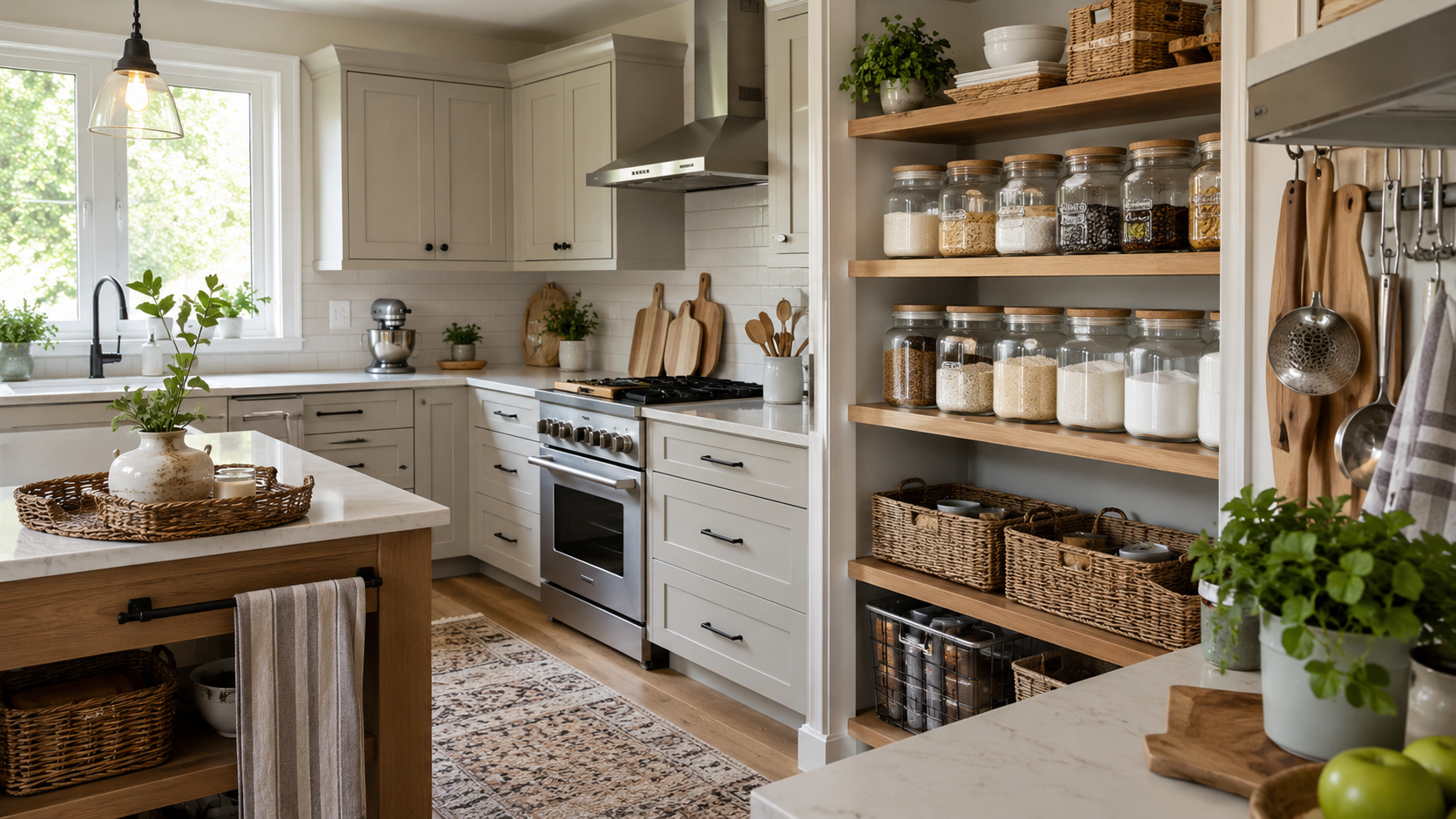
Then, group foods by category. You can create sections for grains, pasta, canned goods, baking ingredients, breakfast foods, snacks, spices, sauces, and beverages.
Furthermore, place older items toward the front and newer items toward the back. This simple habit helps you use food before it expires.
Additionally, use transparent containers or labeled baskets if they fit your budget and routine. They are not required, but they can make the pantry easier to see and maintain.
Certainly, spices and seasonings are small but important kitchen items. When they are disorganized, cooking can become slower and more frustrating.
First, gather all spices in one place. Remove empty containers, expired spices, or seasonings you never use. Then, decide where they should stay.
Ideally, spices should be near the cooking area but protected from excess heat and moisture. A drawer, cabinet shelf, spice rack, or small basket can work well.
Moreover, arrange spices in a way that makes sense to you. You can organize them alphabetically, by frequency of use, or by type of cuisine. The best method is the one you can maintain.
Importantly, the refrigerator is part of kitchen organization too. A messy refrigerator can cause food waste, unpleasant smells, and confusion during meal preparation.
To start, remove expired food, old leftovers, and items that no longer look fresh. Then, wipe shelves and drawers before reorganizing.
Next, group similar foods together. Keep dairy products in one area, vegetables in drawers, fruits in another section, leftovers on one shelf, and drinks in a specific place.
Additionally, use clear containers for leftovers and label them with dates when helpful. This makes it easier to know what should be eaten first.
Finally, review the refrigerator before grocery shopping. This prevents buying duplicates and helps you plan meals using what you already have.
Although cleaning products are often stored in the kitchen, they need to be organized safely. They should not be mixed with food or placed where children and pets can easily reach them.
First, choose a specific location for cleaning supplies. Under the sink is common, but it should be organized and safe. If possible, use a basket or tray to hold products and prevent leaks from spreading.
Next, separate cleaning cloths, sponges, gloves, trash bags, and dishwashing items. Keeping these supplies together makes cleaning faster.
Most importantly, store products according to safety instructions and keep them away from food preparation areas. A well-organized kitchen should also be a safe kitchen.
Naturally, dishwashing is part of daily kitchen life. When dishes pile up, the entire kitchen can feel messy, even if the rest of the room is organized.
Firstly, create a simple habit of washing dishes after meals or loading the dishwasher regularly. Avoid allowing dishes to remain in the sink for long periods.
Additionally, keep dish soap, sponge, brush, and drying cloth close to the sink. This makes the process easier and faster.
Moreover, clear the drying area once dishes are dry. Putting clean dishes away quickly prevents the counter from becoming crowded.
Sometimes, labels can make kitchen organization easier, especially in pantries, storage containers, and shared kitchens. Labels help everyone know where items belong.
For example, you can label containers for rice, pasta, flour, sugar, coffee, tea, snacks, or baking supplies. You can also label baskets for breakfast items, spices, sauces, or cleaning cloths.
However, labels should simplify your routine, not make it complicated. Use them where they help and skip them where they are unnecessary.
Overall, labels are useful when they make the system easier for everyone in the home to follow.
Ultimately, organization only works if it is maintained. A daily kitchen routine helps prevent mess from accumulating.
In the morning, put away clean dishes, clear the sink, and check the countertop. During the day, return items to their places after using them. After meals, wash dishes, wipe counters, and sweep if necessary.
At night, do a quick kitchen reset. Take out trash if needed, store leftovers, clean the sink, and leave the counter ready for the next day.
Over time, these small habits make the kitchen easier to manage and more pleasant to use.
Unfortunately, some common mistakes make kitchens harder to organize. One mistake is keeping too many rarely used items in the most accessible areas. Prime storage space should be reserved for daily essentials.
Another mistake is buying organizers before decluttering. Organizers can help, but they cannot solve the problem of having too many unnecessary objects.
Additionally, avoid storing items far from where they are used. If your cooking utensils are far from the stove or your dishes are far from the serving area, daily tasks become slower.
Finally, do not ignore maintenance. Even the best kitchen organization system needs regular review.