How to Plan a More Organized and Easy-to-Maintain Home

Firstly, the laundry area is one of the most practical spaces in the home, but it is also one of the easiest areas to become disorganized. Cleaning products, laundry baskets, dirty clothes, clean clothes, cloths, buckets, brooms, mops, and household tools often share the same limited space. Without a clear system, the laundry area can quickly become crowded and difficult to use.
Moreover, a functional laundry area can make many household tasks easier. Washing clothes, drying items, storing cleaning supplies, organizing cloths, and keeping the home clean all depend on this space working well. Even if your laundry area is small, a few smart changes can make it more efficient, safer, and easier to maintain.
Therefore, this guide will show you how to organize your laundry area in a functional way. You will learn how to declutter the space, store cleaning products safely, organize laundry items, use vertical storage, create routines, and make the area more practical for everyday life.
Before anything else, it is important to understand how your laundry area is used. In some homes, this space is only for washing and drying clothes. In others, it also stores cleaning products, pet supplies, garden tools, buckets, ironing items, or household maintenance objects.
For this reason, observe your routine. What do you use in this area every day? What items are necessary? What objects are only taking up space? Understanding the function of the laundry area helps you decide what should stay and what should be moved elsewhere.
Additionally, avoid treating the laundry area as a storage room for random objects. When too many unrelated items end up there, the space loses its purpose and becomes harder to clean.
Importantly, organization begins with decluttering. Before buying shelves, baskets, or containers, remove everything that does not belong or is no longer useful.
To begin, check cleaning products, laundry supplies, cloths, buckets, brushes, hangers, empty bottles, broken items, and unused objects. Separate them into categories such as keep, donate, recycle, repair, or discard.
Then, remove expired products, empty packages, damaged tools, old sponges, and cloths that can no longer be used. These items take up space and make the laundry area feel messy.
Furthermore, keep only what supports your daily home care routine. A functional laundry area should be practical, not overcrowded.
Next, group similar items so the laundry area becomes easier to use. When everything has a clear category, it is much easier to find what you need and return items to their proper places.
For example, keep laundry products together, such as detergent, fabric softener, stain remover, and laundry bags. Keep general cleaning products in another section. Store cloths, sponges, gloves, and brushes in their own area.
Additionally, separate tools by purpose. Brooms, mops, dustpans, buckets, and floor cleaning supplies should be grouped in a way that makes sense for your routine.
Overall, categories create order. They also help you notice when you have too many repeated items or when something needs to be replaced.
Most importantly, cleaning products should always be stored safely. Many household products need careful handling and should not be left where children or pets can easily reach them.
Firstly, choose a high shelf, closed cabinet, or secure storage area for cleaning supplies. If possible, keep products in their original packaging so labels and instructions remain visible.
Next, avoid mixing products in unlabeled containers. This can cause confusion and may be unsafe. Keeping products clearly identified helps prevent mistakes.
Additionally, separate cleaning products from food, personal care items, and pet items. The laundry area may be practical for storage, but safety should always come first.
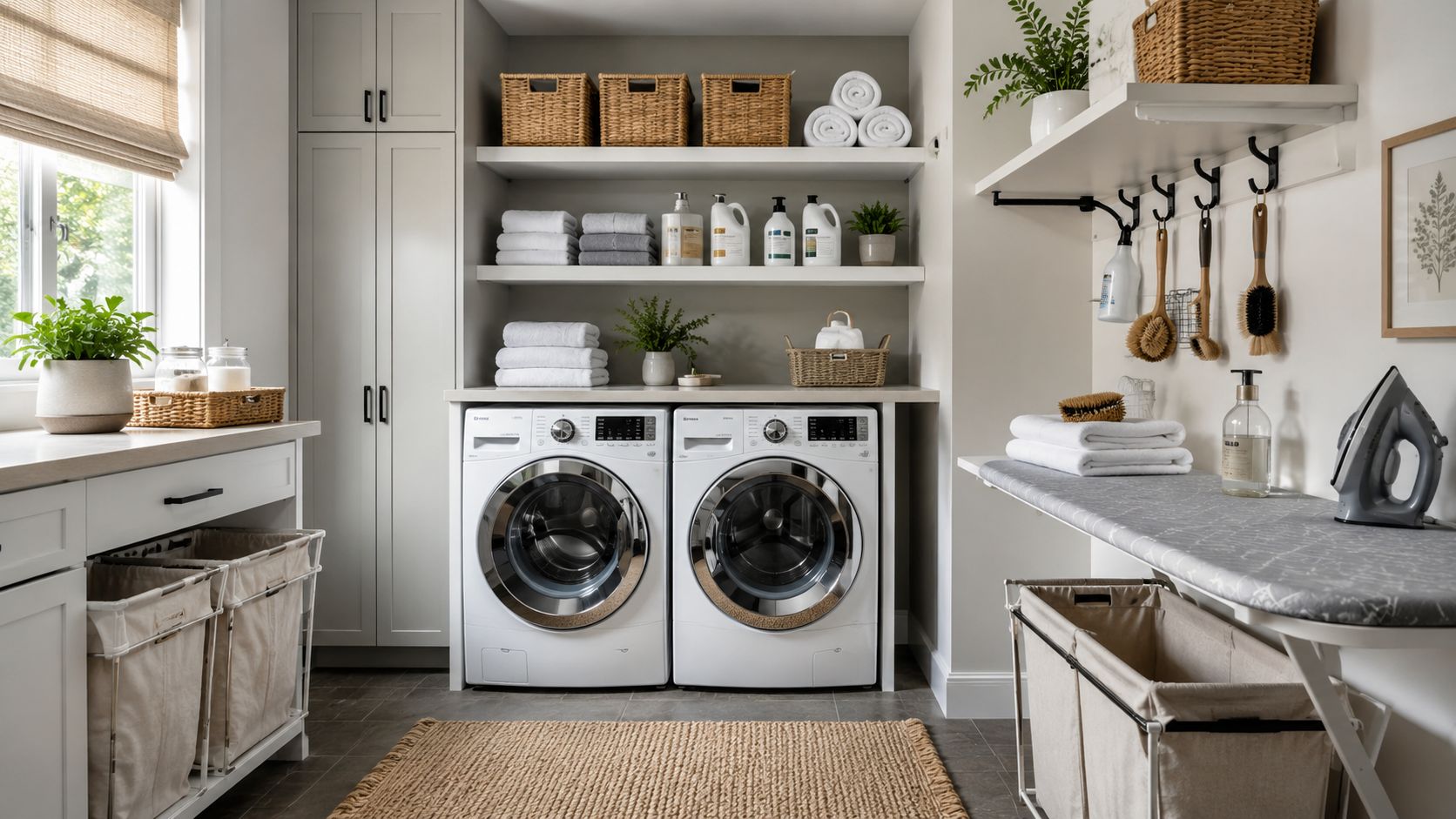
Clearly, laundry areas are often small, so vertical space is extremely valuable. Walls, doors, and high shelves can help you organize items without taking up floor space.
For instance, wall shelves can store detergent, fabric softener, cleaning sprays, baskets, and folded cloths. Hooks can hold brooms, mops, dusters, brushes, and reusable bags.
Moreover, a wall-mounted organizer can keep small cleaning tools visible and accessible. This prevents items from being piled on the floor or hidden behind larger objects.
However, avoid overloading shelves. Heavy products should be stored securely, preferably on stable lower shelves or inside cabinets. The goal is to create practical storage without creating risk.
Naturally, laundry products should be easy to access because they are used regularly. When detergent, fabric softener, stain remover, and laundry accessories are scattered, washing clothes becomes less efficient.
First, choose a specific shelf, basket, or cabinet for laundry supplies. Keep products used in every wash at the front and occasional products behind them.
Next, use a tray or basket to contain bottles and prevent spills from spreading. This also makes it easier to clean the shelf when needed.
Additionally, check product levels regularly. Knowing what you already have helps avoid buying duplicates and keeps the area from becoming overcrowded.
Importantly, dirty clothes need a clear system. Without one, clothes may pile up on the floor, inside baskets, or on top of the washing machine.
To start, use laundry baskets or hampers that match your household needs. Some homes may need one basket, while others may benefit from separate baskets for whites, colors, towels, delicate items, or work clothes.
Moreover, choose baskets that fit the available space. In a small laundry area, tall narrow baskets or stackable baskets may work better than large wide ones.
Additionally, avoid letting laundry piles grow too much. A simple washing schedule can prevent the area from becoming overwhelming.
Often, clean clothes cause as much clutter as dirty clothes. After washing and drying, clothes may remain in baskets for days if there is no system for folding and putting them away.
Therefore, create a specific place for clean laundry. This may be a folding surface, a clean basket, or a temporary shelf. The important thing is to keep clean clothes separate from dirty items and cleaning products.
Next, fold or hang clothes as soon as possible after drying. This helps prevent wrinkles and keeps laundry from spreading into bedrooms, chairs, or living areas.
Furthermore, make it a habit to return clean clothes to wardrobes and drawers quickly. Laundry organization is connected to bedroom organization.
Certainly, baskets and containers are useful for organizing a laundry area. They help group items, hide visual clutter, and make shelves easier to maintain.
For example, one basket can hold cleaning cloths, another can store sponges and brushes, and another can keep laundry accessories such as garment bags or clothespins.
Additionally, transparent containers can be helpful when you need to see what is inside. Labeled baskets are useful when several people use the space.
However, avoid using containers to hide unnecessary clutter. Baskets should support organization, not become places where random objects are forgotten.
Usually, cleaning cloths, microfiber towels, dishcloths, and floor cloths can become messy if they are not stored properly. Since they are used often, they need a simple system.
First, separate cloths by purpose. Keep kitchen cloths, bathroom cloths, floor cloths, dusting cloths, and general cleaning cloths in different stacks or containers.
Next, make sure clean cloths are completely dry before storing them. Damp fabric can create unpleasant smells and should not be placed inside closed cabinets.
Moreover, review cloths regularly. Items that are too worn out can be repurposed for rough cleaning or discarded responsibly when they are no longer useful.
Clearly, large cleaning tools can take up a lot of space if they are not organized. Brooms, mops, dustpans, buckets, and brushes should not be left scattered across the floor.
To solve this, use wall hooks, clips, or a vertical tool organizer. Hanging these items keeps the floor clear and makes the laundry area easier to clean.
Additionally, store buckets stacked or inside each other if possible. Keep them in a corner or lower shelf where they do not block movement.
Furthermore, allow mops and brushes to dry properly before storing them. This helps keep the area fresher and more hygienic.
Importantly, the top of the washing machine should not become a permanent storage surface. It may be tempting to place products, clothes, tools, and baskets there, but this can make the area look messy and reduce practicality.
Instead, keep only what is necessary near the machine. If you need detergent close by, place it in a small tray or nearby shelf.
Additionally, wipe the washing machine regularly. Dust, detergent residue, and water spots can accumulate over time. Keeping the machine clean improves the appearance of the entire laundry area.
Also, check behind and around the machine occasionally to remove dust, lint, or misplaced items.
If you iron clothes at home, it helps to create a simple ironing station. This does not need to be large, but it should be organized.
First, store the iron, ironing board, spray bottle, and related items together. A wall hook or narrow cabinet can help save space.
Next, fold the ironing board properly after use and return everything to its place. Leaving ironing items open or scattered can make the laundry area harder to use.
Additionally, if you do not iron often, store these items in a less accessible area to save space for daily laundry products.
Sometimes, labels make the laundry area easier for everyone in the home to use. Labels are especially helpful when products and tools are stored in baskets, boxes, or closed cabinets.
For example, you can label containers as laundry products, cleaning cloths, bathroom cleaning, floor cleaning, extra sponges, or garden tools. This makes it clear where each item belongs.
Moreover, labels help maintain the system over time. When people know where things go, the laundry area stays organized longer.
However, labels should be simple. The goal is to make the space easier, not more complicated.
Naturally, laundry areas can become humid because of washing machines, wet clothes, mops, and cleaning supplies. Good ventilation helps keep the space fresh and reduces unpleasant odors.
Firstly, open windows when possible. Fresh air helps dry the area and improves comfort.
Secondly, avoid storing damp clothes, wet cloths, or used mops in closed spaces. Let them dry before putting them away.
Additionally, keep the floor dry and clean. Water spills should be wiped quickly to prevent stains, slipping, or bad smells.
Practically, an organized laundry area should also be easy to clean. If the floor is full of objects and shelves are crowded, cleaning becomes difficult.
Therefore, keep the floor as clear as possible. Hang tools, use shelves, and store small items in containers.
Next, avoid keeping too many products open or exposed. Dust and lint can collect on bottles, baskets, and tools. Closed cabinets or organized shelves can reduce this problem.
Also, schedule a quick weekly cleaning. Wipe surfaces, sweep or mop the floor, clean the washing machine exterior, and check if any items are out of place.
Since many homes store garden supplies near the laundry area, it is important to organize them carefully. Plant pots, small tools, gloves, soil, and watering cans can create mess if they are mixed with laundry products.
First, create a separate section for garden items. Use a shelf, box, or cabinet to keep them contained.